Strategically located within the European transport network
The Rendsburg District Port is situated at the heart of one of Europe’s most important transport corridors. Schleswig-Holstein forms a direct link between Central Europe and Scandinavia and is also a hub for goods flows to Northern and Eastern Europe as well as the Baltic region.
Thanks to its location on the Kiel Canal with direct access to the North Sea and the Baltic Sea, as well as its proximity to the A7 motorway and the north-south rail link, national and international markets can be reached efficiently.
The Hamburg metropolitan region is a short distance away and provides additional logistical connections to global trade routes – by water, road and rail.


Technical & nautical specifications
The following information provides an overview of the nautical and operational conditions at Rendsburg District Port. It is intended to provide a quick guide for planning vessel calls and cargo handling processes.
| Federal waterway | Kiel Canal |
| Navigability | all year round |
| Tidal influence | none |
| Max. water depth | up to 8.7 m |
| Max. vessel size | up to approx. 20,000 dwt |
| ISPS Code compliant | yes |
| Shore power connection | available |
Shore power supply
The berths at Rendsburg District Harbour are equipped with shore power connections. Use of these connections is mandatory for vessels equipped to do so whilst berthed.
Electricity consumption is recorded digitally and linked to the respective vessel call. This provides reliable data for documenting regulatory requirements.
The requirement for shore power must be specified when registering the vessel. Once the call has been confirmed, access details for using the facility will be provided.

Quay facilities and berths
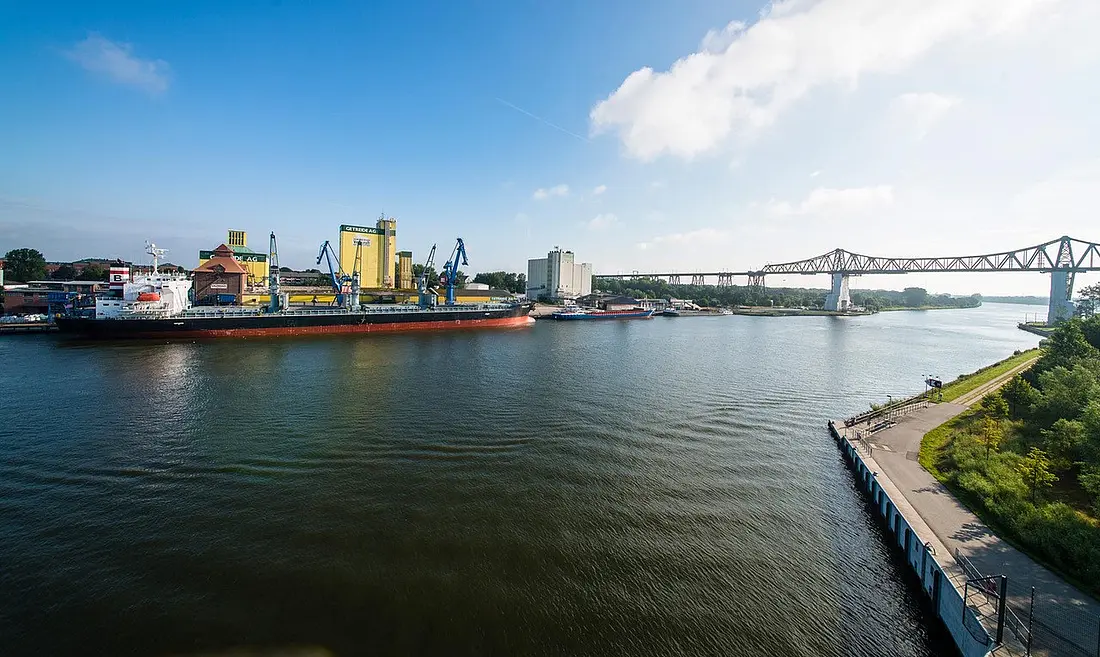
There are several berths available along the approximately 1,000-metre-long quay. Vessels can be handled in parallel at up to four positions. The specific allocation is determined during the vessel registration process, depending on the vessel’s size, draught and type of cargo.


Handling and storage areas
Adjacent to the berths, paved open areas are available for temporary storage and logistics operations. These areas can be allocated on a project-by-project basis and enable short distances between the vessel and onward transport.
- Paved open areas in the immediate port area
- Direct access from the berths
- Flexible allocation depending on volume and project scope
- Provision subject to agreement and availability

Businesses in the port area
The port area is home to companies from the logistics, retail and industrial sectors. Several businesses use the district port as a transhipment hub and integrate the location into their logistics processes.









Next steps for your vessel’s call
Once the requirements for your call have been met, you can register your berth here and view the applicable tariffs and regulations.